Technology · British
Ada Lovelace
Also known as 阿达·洛夫莱斯
1815 — 1852
Mathematician and writer on computing
A mathematical writer who saw that a general-purpose calculating machine might work with symbols as well as numbers.
Saved lives stay only on this device.
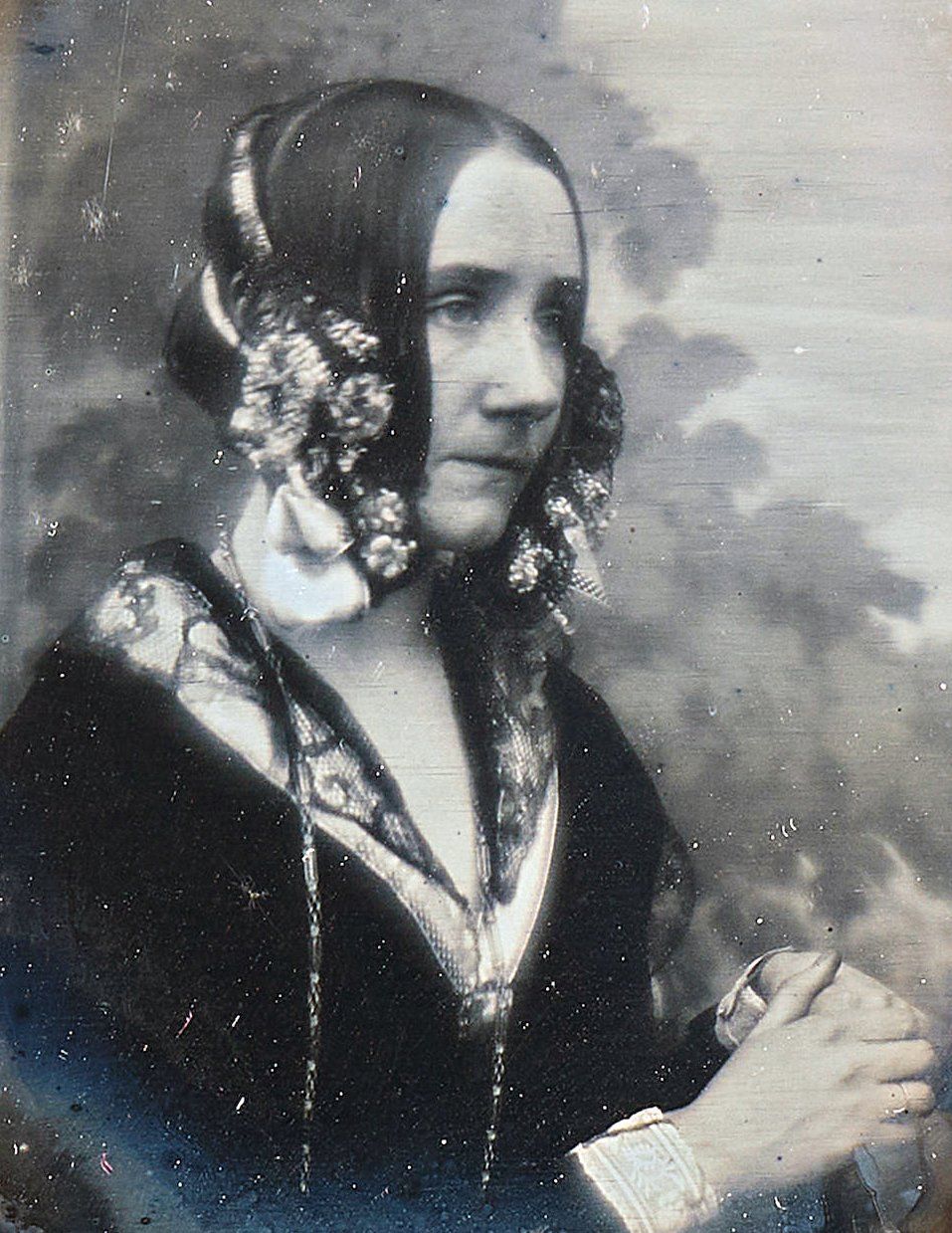
The life behind the name
A life, in context
Ada Lovelace was born Augusta Ada Byron in London. Her mother encouraged mathematical education, and Ada studied with teachers and correspondents who helped develop her interest in science. She met Charles Babbage in 1833 and became fascinated by the possibilities of his calculating machinery.
In 1843, Lovelace translated an article by the Italian engineer Luigi Menabrea about Babbage's proposed Analytical Engine. Her extensive accompanying notes went beyond translation. They described a procedure for calculating Bernoulli numbers and considered how a machine might manipulate symbols according to rules. The Engine was never completed in their lifetimes, so these ideas concerned a planned device rather than a functioning modern computer.
Lovelace's notes connected mathematical detail with a broader vision: a machine might operate on relationships expressed through symbols, potentially including music. Her collaboration with Babbage and the exact division of their contributions continue to be studied by historians. She died in 1852 at the age of 36. Her enduring significance lies in recognizing that the meaning of computation could extend beyond arithmetic, while treating its possibilities with both imagination and analysis.
What they helped make possible
The legacy that continues
Lovelace's published notes offered an early, detailed account of how a programmable machine could carry out a structured calculation. They also articulated the wider potential of symbolic processing. Her place in computing history is grounded in those surviving writings and in collaboration with Babbage, rather than in claims that she built a modern computer.
Moments along the way
A life in chapters
- 1833
Meeting Charles Babbage
Encountered Babbage and his ideas for calculating machines.
- 1843
Translation and notes
Published her translation of Menabrea with extensive notes on the Analytical Engine.
- 1843
A procedure for Bernoulli numbers
Described a sequence of operations for a proposed programmable machine.
Remembered together
A place to remember together.
Leave a gesture, share a thought, and keep this life close.
Following is saved to your account across devices. “Save for later” keeps a separate bookmark in this browser.
Checking your account…
Saat tenang untuk mengenang.
Adat dan kepercayaan berbeza-beza. Pilih secara bebas cara yang sesuai untuk diri anda.
Saat mengenang bersama
Thoughts on this life
Comments are reviewed before appearing publicly. Share a thoughtful reflection on this person’s life or work.
Suggest a profile correction
Help keep this public record accurate. Suggestions are reviewed before the profile is changed, and a source link is especially helpful for factual details.
Loading shared remembrance…
A personal practice
Carry something forward.
A legacy can begin with one small choice. Write for yourself; these words are never added to the public memorial.
Private to this browser. Turning saving off removes the saved copy. Download a copy to take it with you.
Not saved on this device.
Share this public story
A name, a story and a light to carry forward. This link opens the reviewed public page.
Create a memory book
Choose the stories to keep, arrange their chapters, and make a printable copy. Book edits apply to your exported copy.
Every life is a light. A story to keep.
7 selected chapters
Edit this chapter
Edit this chapter
Edit this chapter
Edit this chapter
Edit this chapter
Edit this chapter
Edit this chapter
Read further
Sources & further reading
Explore the published references behind this profile. These links open in a new tab.
- Computer History Museum — Ada Lovelace (opens in a new tab)www.computerhistory.org
- Encyclopaedia Britannica — Ada Lovelace (opens in a new tab)www.britannica.com
- Portrait: Antoine Claudet · Public domain (opens in a new tab)commons.wikimedia.org
A place for your own remembrance
Is there someone you are remembering?
You can begin with a name and one memory. A private memorial space can hold photographs, stories and the dates your family returns to.
Private by default. You decide what to share.