Science · Polish and French
Marie Curie
Also known as 玛丽·居里(居里夫人)
1867 — 1934
Physicist and chemist
A pioneer of radioactivity research and the first person to receive Nobel Prizes in two different scientific fields.
Saved lives stay only on this device.
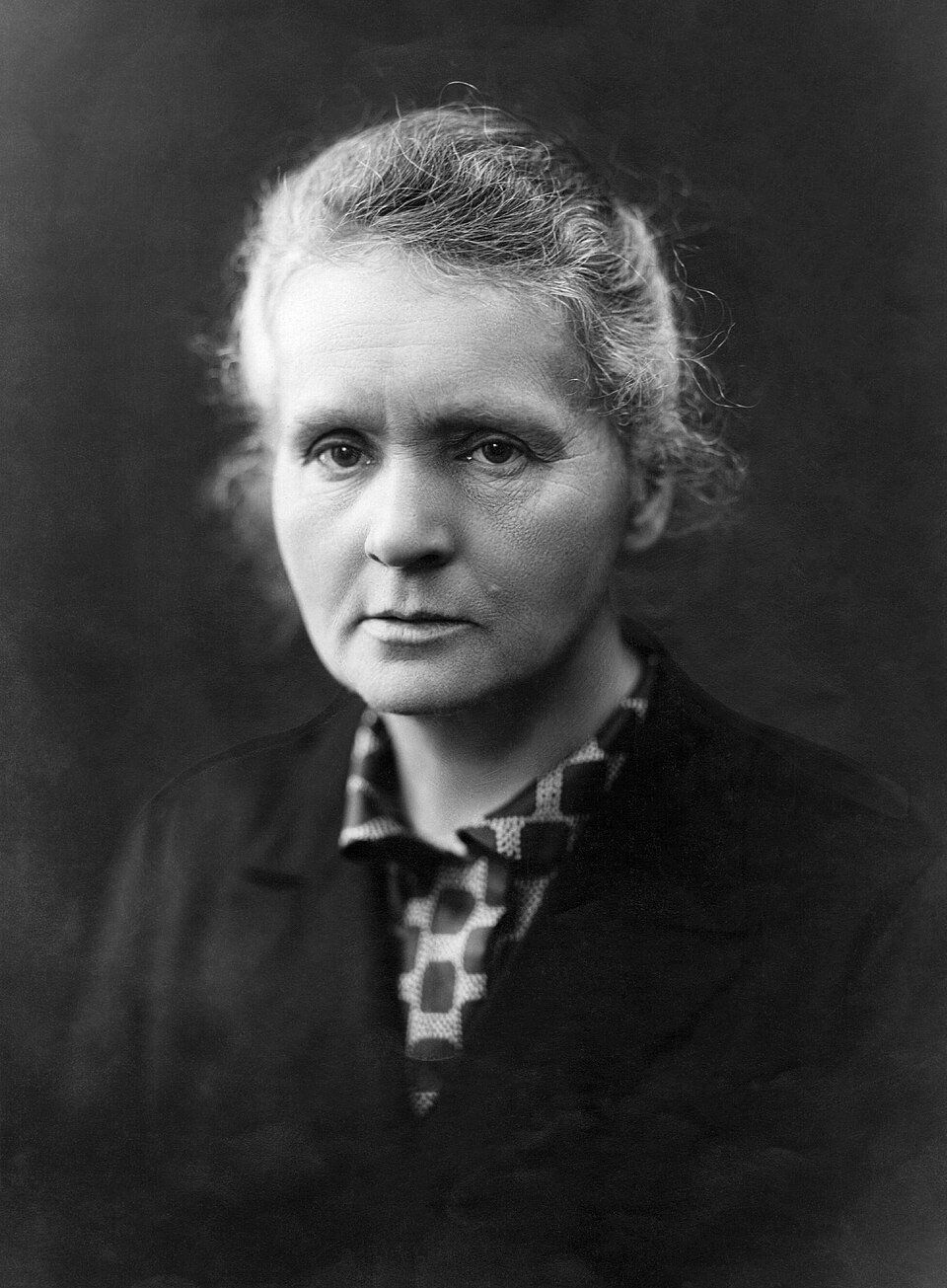
The life behind the name
A life, in context
Marie Curie was born Maria Skłodowska in Warsaw, where educational opportunities for women were restricted. She moved to Paris in 1891 to study at the Sorbonne and built a scientific career through demanding experimental work. With Pierre Curie, she investigated the radiation emitted by uranium minerals and helped establish radioactivity as a field of research.
In 1898, the Curies announced the discovery of polonium and radium. Separating and studying radioactive materials required years of careful measurements and laborious chemical processing. In 1903, Marie and Pierre Curie shared the Nobel Prize in Physics with Henri Becquerel. After Pierre's death in 1906, she continued their work and became the first woman to hold a professorship at the Sorbonne.
The Nobel Prize in Chemistry followed in 1911 for her work on radium and polonium. During the First World War, Curie helped develop mobile radiography services and train personnel who could use them. She also supported research institutions and the next generation of scientists. Her life joins foundational discovery with practical service, while reminding us that early researchers worked before the dangers of sustained radiation exposure were fully understood.
What they helped make possible
The legacy that continues
Curie helped establish methods for measuring and isolating radioactive substances, changing physics and chemistry and supporting later medical applications. Her two Nobel Prizes recognized distinct bodies of work. Her wartime radiography efforts showed how scientific expertise could assist care, and her teaching and institution building extended her influence beyond her own experiments.
Moments along the way
A life in chapters
- 1891
Studies in Paris
Moved to Paris to study mathematics and physics at the Sorbonne.
- 1898
Polonium and radium
Marie and Pierre Curie announced the discovery of two radioactive elements.
- 1903
Nobel Prize in Physics
Shared the prize with Pierre Curie and Henri Becquerel.
- 1911
Nobel Prize in Chemistry
Received a second Nobel Prize for her research on radium and polonium.
Remembered together
A place to remember together.
Leave a gesture, share a thought, and keep this life close.
Following is saved to your account across devices. “Save for later” keeps a separate bookmark in this browser.
Checking your account…
조용히 추억하는 시간.
관습과 믿음은 서로 다릅니다. 자신에게 맞는 방식을 자유롭게 선택하세요.
함께 남긴 추모
Thoughts on this life
Comments are reviewed before appearing publicly. Share a thoughtful reflection on this person’s life or work.
Suggest a profile correction
Help keep this public record accurate. Suggestions are reviewed before the profile is changed, and a source link is especially helpful for factual details.
Loading shared remembrance…
A personal practice
Carry something forward.
A legacy can begin with one small choice. Write for yourself; these words are never added to the public memorial.
Private to this browser. Turning saving off removes the saved copy. Download a copy to take it with you.
Not saved on this device.
Share this public story
A name, a story and a light to carry forward. This link opens the reviewed public page.
Create a memory book
Choose the stories to keep, arrange their chapters, and make a printable copy. Book edits apply to your exported copy.
Every life is a light. A story to keep.
8 selected chapters
Edit this chapter
Edit this chapter
Edit this chapter
Edit this chapter
Edit this chapter
Edit this chapter
Edit this chapter
Edit this chapter
Read further
Sources & further reading
Explore the published references behind this profile. These links open in a new tab.
- Nobel Prize — Marie Curie biography (opens in a new tab)www.nobelprize.org
- Nobel Prize — Chemistry prize facts (opens in a new tab)www.nobelprize.org
- Nobel Prize — Women who changed science (opens in a new tab)www.nobelprize.org
- Portrait: Henri Manuel · Public domain (opens in a new tab)commons.wikimedia.org
A place for your own remembrance
Is there someone you are remembering?
You can begin with a name and one memory. A private memorial space can hold photographs, stories and the dates your family returns to.
Private by default. You decide what to share.