Technology · American
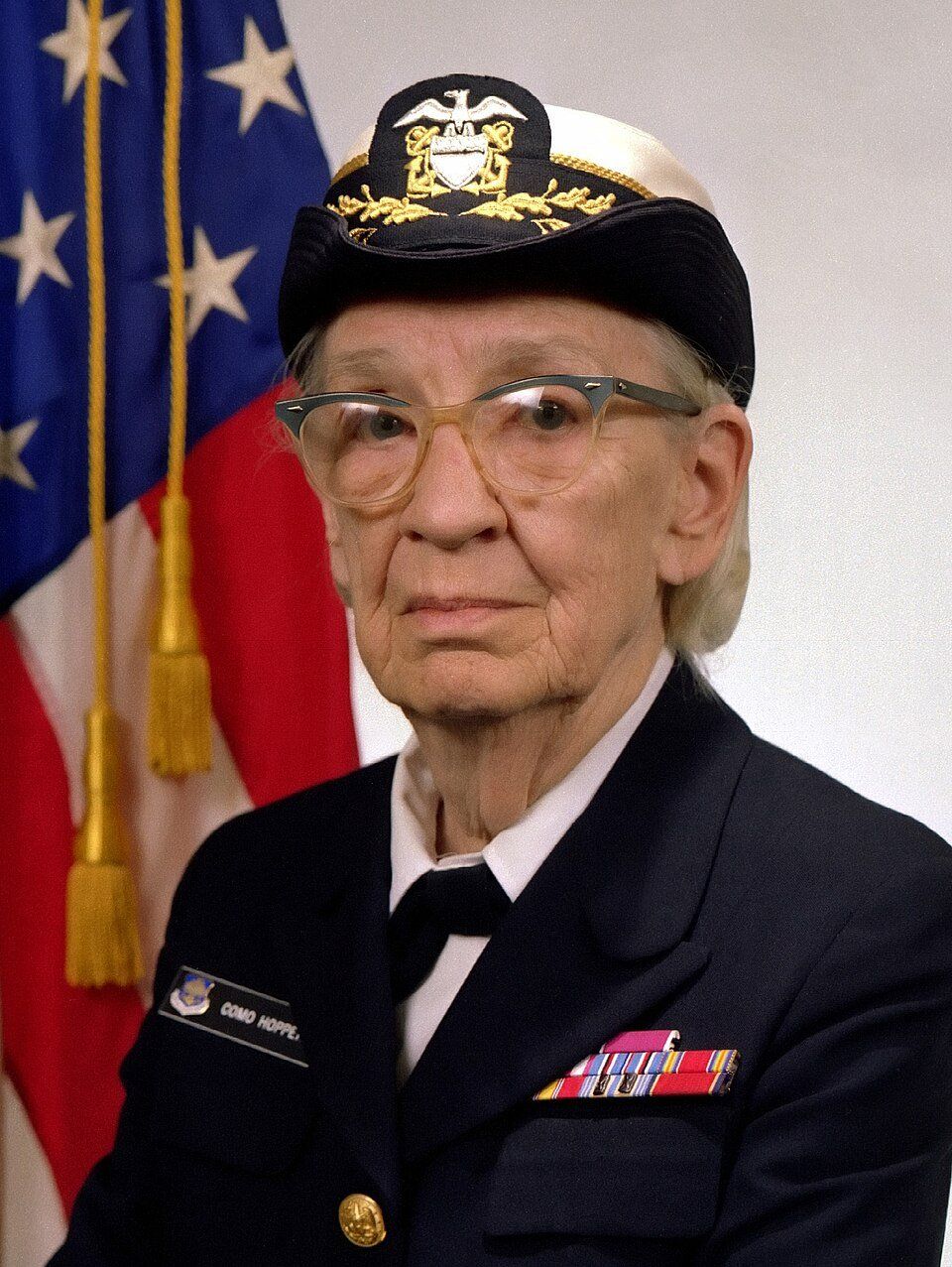
Grace Hopper
Also known as 格蕾丝·霍珀
1906 — 1992
Computer scientist and United States Navy officer
A computing pioneer who advanced compilers and helped make programming languages more usable for people and organizations.
Saved lives stay only on this device.
The life behind the name
A life, in context
Grace Hopper was born in New York and studied mathematics at Vassar and Yale, earning a doctorate before teaching at Vassar. During the Second World War, she joined the Navy Reserve and worked with the Harvard Mark I computer. Early computing involved machines with demanding procedures and specialized instructions. Hopper became interested in tools that could translate more accessible descriptions of a task into operations a computer could perform.
Her work on the A-0 system helped establish compiler techniques, and her team developed FLOW-MATIC, which used English-like statements for business data processing. These ideas influenced the collaborative development of COBOL, a language that became widely used in government and commercial systems. Hopper also worked on standards, training and the practical compatibility of computing systems. She continued a long naval career and retired as a rear admiral. Her achievements belong to the combined work of programmers, committees and institutions, as well as to her own technical and educational leadership. The resulting tools helped move programming toward tasks and language that more users could understand.
What they helped make possible
The legacy that continues
Hopper advanced compiler technology, business programming languages and computing standards. Her work helped make software development more accessible and portable across systems.
Moments along the way
A life in chapters
- 1944
Harvard Mark I
Worked on one of the early large automatic computing machines.
- 1952
A-0 system
Developed an early system associated with compiler technology.
- 1959
COBOL development
Her work and advice influenced the collaborative creation of COBOL.
Remembered together
A place to remember together.
Leave a gesture, share a thought, and keep this life close.
Following is saved to your account across devices. “Save for later” keeps a separate bookmark in this browser.
Checking your account…
静かに思いを寄せるひととき。
習慣や信仰は人それぞれです。ご自身に合う方法を自由にお選びください。
寄せられた思い
Thoughts on this life
Comments are reviewed before appearing publicly. Share a thoughtful reflection on this person’s life or work.
Suggest a profile correction
Help keep this public record accurate. Suggestions are reviewed before the profile is changed, and a source link is especially helpful for factual details.
Loading shared remembrance…
A personal practice
Carry something forward.
A legacy can begin with one small choice. Write for yourself; these words are never added to the public memorial.
Private to this browser. Turning saving off removes the saved copy. Download a copy to take it with you.
Not saved on this device.
Share this public story
A name, a story and a light to carry forward. This link opens the reviewed public page.
Create a memory book
Choose the stories to keep, arrange their chapters, and make a printable copy. Book edits apply to your exported copy.
Every life is a light. A story to keep.
7 selected chapters
Edit this chapter
Edit this chapter
Edit this chapter
Edit this chapter
Edit this chapter
Edit this chapter
Edit this chapter
Read further
Sources & further reading
Explore the published references behind this profile. These links open in a new tab.
- Wikipedia — Grace Hopper (opens in a new tab)en.wikipedia.org
- National Women's History Museum — Grace Hopper (opens in a new tab)www.womenshistory.org
- Portrait: James S. Davis · Public domain (opens in a new tab)commons.wikimedia.org
A place for your own remembrance
Is there someone you are remembering?
You can begin with a name and one memory. A private memorial space can hold photographs, stories and the dates your family returns to.
Private by default. You decide what to share.