Science · British
Rosalind Franklin
Also known as 罗莎琳德·富兰克林
1920 — 1958
Chemist and X-ray crystallographer
A crystallographer whose research clarified the structures of DNA, coal and viruses.
Saved lives stay only on this device.
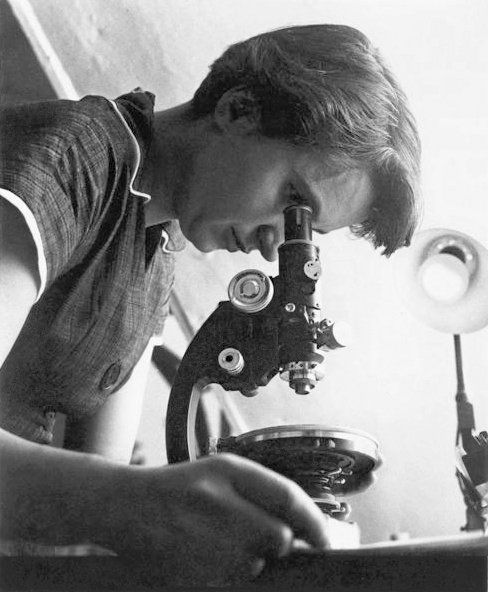
The life behind the name
A life, in context
Rosalind Franklin was born in London and studied chemistry at Cambridge. Her early research investigated the structure of coal and carbon, and work in Paris strengthened her expertise in X-ray diffraction. At King's College London, she produced precise measurements of DNA fibers, distinguishing forms with different water contents. Her analysis established important constraints for any proposed molecular structure and reflected close attention to experimental conditions and the interpretation of diffraction patterns.
The image known as Photograph 51 was produced with her doctoral student Raymond Gosling in 1952. Franklin's data and analyses informed the development of the double-helix model, though their use and the recognition of her contribution became subjects of lasting historical debate. She later moved to Birkbeck College, where she led productive research on viruses, including tobacco mosaic virus, and trained younger scientists. She died from ovarian cancer at thirty-seven. Her career deserves remembrance as a broad body of structural research, beyond one famous image. It also encourages attention to the ways evidence, collaboration and credit are handled within scientific institutions.
What they helped make possible
The legacy that continues
Franklin's diffraction research provided essential structural evidence about DNA and advanced the study of carbon and viruses. Her work joined technical precision with careful interpretation.
Moments along the way
A life in chapters
- 1945
Cambridge doctorate
Received her doctorate for research connected with coal and carbon.
- 1952
Photograph 51
With Raymond Gosling, produced a significant DNA diffraction image.
- 1953
Virus research at Birkbeck
Moved to Birkbeck and developed a research program on virus structures.
Remembered together
A place to remember together.
Leave a gesture, share a thought, and keep this life close.
Following is saved to your account across devices. “Save for later” keeps a separate bookmark in this browser.
Checking your account…
A quiet moment to remember.
Customs and beliefs differ. Choose a gesture that feels right to you; each is optional.
Shared moments of remembrance
Thoughts on this life
Comments are reviewed before appearing publicly. Share a thoughtful reflection on this person’s life or work.
Suggest a profile correction
Help keep this public record accurate. Suggestions are reviewed before the profile is changed, and a source link is especially helpful for factual details.
Loading shared remembrance…
A personal practice
Carry something forward.
A legacy can begin with one small choice. Write for yourself; these words are never added to the public memorial.
Private to this browser. Turning saving off removes the saved copy. Download a copy to take it with you.
Not saved on this device.
Share this public story
A name, a story and a light to carry forward. This link opens the reviewed public page.
Create a memory book
Choose the stories to keep, arrange their chapters, and make a printable copy. Book edits apply to your exported copy.
Every life is a light. A story to keep.
7 selected chapters
Edit this chapter
Edit this chapter
Edit this chapter
Edit this chapter
Edit this chapter
Edit this chapter
Edit this chapter
Read further
Sources & further reading
Explore the published references behind this profile. These links open in a new tab.
- Wikipedia — Rosalind Franklin (opens in a new tab)en.wikipedia.org
- King's College London — Rosalind Franklin biography (opens in a new tab)www.kcl.ac.uk
- Portrait: MRC Laboratory of Molecular Biology · CC BY-SA 4.0 (opens in a new tab)commons.wikimedia.org
- Portrait license: CC BY-SA 4.0 (opens in a new tab)creativecommons.org
A place for your own remembrance
Is there someone you are remembering?
You can begin with a name and one memory. A private memorial space can hold photographs, stories and the dates your family returns to.
Private by default. You decide what to share.