Care & public service · American
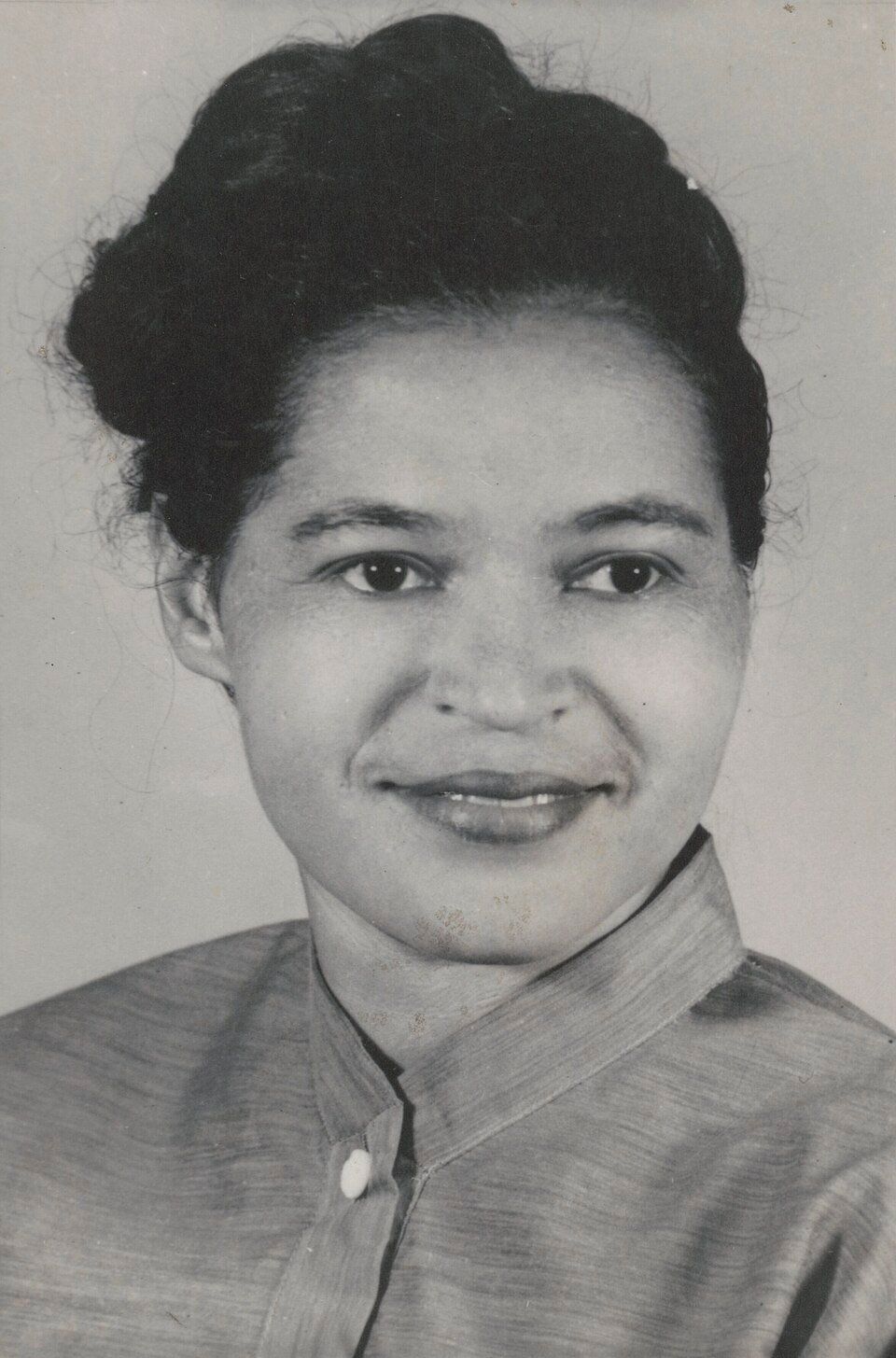
Rosa Parks
Also known as Rosa Louise McCauley Parks · 罗莎·帕克斯
1913 — 2005
Civil rights activist and community organizer
A lifelong civil rights organizer whose refusal to surrender her bus seat became a focal point for sustained collective action against segregation.
Saved lives stay only on this device.
The life behind the name
A life, in context
Rosa Parks was born in Tuskegee, Alabama, and grew up within the restrictions and violence of racial segregation. She married Raymond Parks and became involved in civil rights work well before the event for which she is most widely remembered. As secretary of the Montgomery branch of the NAACP, she documented injustice and worked with local activists. On 1 December 1955, she refused a bus driver's demand to give up her seat to a white passenger and was arrested.
Her arrest helped trigger the Montgomery bus boycott, sustained through organized transport, meetings, legal challenges, and the daily commitment of the city's Black community. Parks and her family faced job losses and threats, eventually moving to Detroit in 1957. There she continued activism and later worked for Congressman John Conyers, helping constituents with housing and other practical concerns. She also supported youth education through the Rosa and Raymond Parks Institute for Self Development. Parks died in Detroit in 2005. Her life is better understood as a long record of purposeful organizing than as one isolated moment of refusal, and the boycott itself depended on many people whose efforts continued far from public attention.
What they helped make possible
The legacy that continues
Parks helped connect individual resistance with collective organizing against segregation. Her decades of work on civil rights, practical assistance, and youth education give the bus boycott a broader context and show how public change depends on sustained local commitment.
Moments along the way
A life in chapters
- 1943
NAACP organizing
Began serving as secretary of the Montgomery NAACP branch.
- 1955
The bus arrest
Her refusal to surrender her seat helped launch the Montgomery bus boycott.
- 1987
Work with young people
Co-founded the Rosa and Raymond Parks Institute for Self Development.
Remembered together
A place to remember together.
Leave a gesture, share a thought, and keep this life close.
Following is saved to your account across devices. “Save for later” keeps a separate bookmark in this browser.
Checking your account…
A quiet moment to remember.
Customs and beliefs differ. Choose a gesture that feels right to you; each is optional.
Shared moments of remembrance
Thoughts on this life
Comments are reviewed before appearing publicly. Share a thoughtful reflection on this person’s life or work.
Suggest a profile correction
Help keep this public record accurate. Suggestions are reviewed before the profile is changed, and a source link is especially helpful for factual details.
Loading shared remembrance…
A personal practice
Carry something forward.
A legacy can begin with one small choice. Write for yourself; these words are never added to the public memorial.
Private to this browser. Turning saving off removes the saved copy. Download a copy to take it with you.
Not saved on this device.
Share this public story
A name, a story and a light to carry forward. This link opens the reviewed public page.
Create a memory book
Choose the stories to keep, arrange their chapters, and make a printable copy. Book edits apply to your exported copy.
Every life is a light. A story to keep.
7 selected chapters
Edit this chapter
Edit this chapter
Edit this chapter
Edit this chapter
Edit this chapter
Edit this chapter
Edit this chapter
Read further
Sources & further reading
Explore the published references behind this profile. These links open in a new tab.
- National Park Service — Rosa Parks (opens in a new tab)www.nps.gov
- Wikipedia — Rosa Parks (opens in a new tab)en.wikipedia.org
- Portrait: Unknown authorUnknown author · Public domain (opens in a new tab)commons.wikimedia.org
A place for your own remembrance
Is there someone you are remembering?
You can begin with a name and one memory. A private memorial space can hold photographs, stories and the dates your family returns to.
Private by default. You decide what to share.