Science · British
Paul Dirac
Also known as 保罗·狄拉克
1902 — 1984
Theoretical physicist
A mathematical physicist whose relativistic equation for the electron helped lead to the prediction of antimatter.
Saved lives stay only on this device.
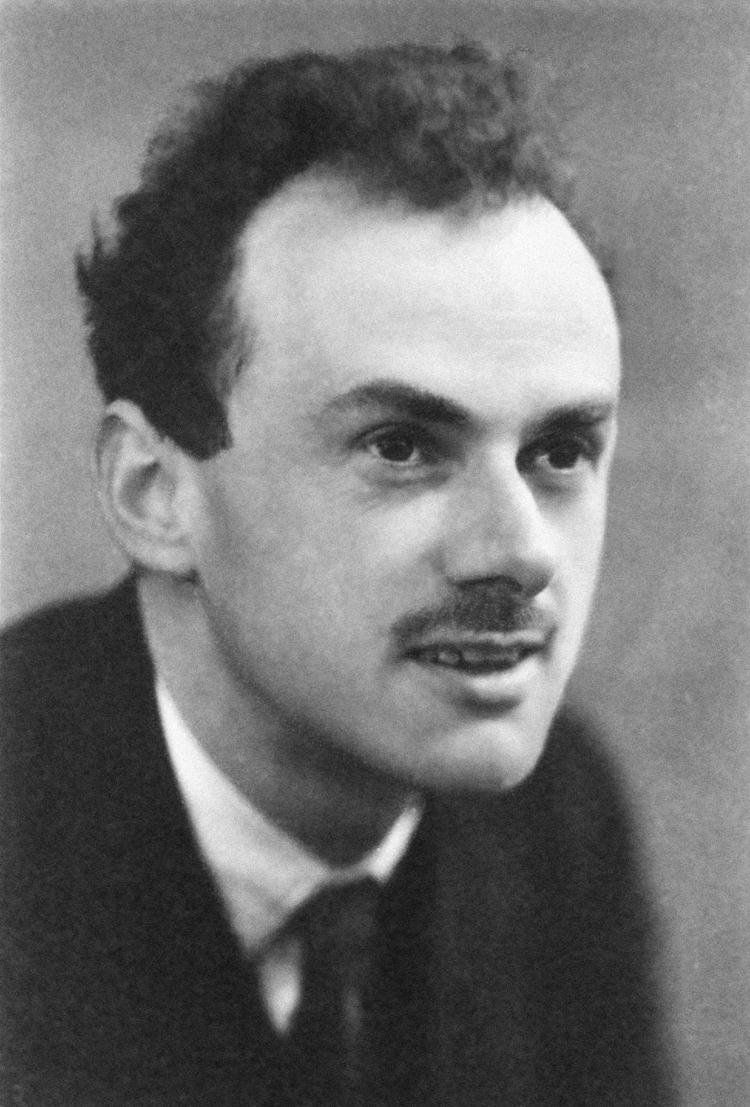
The life behind the name
A life, in context
Paul Dirac was born in Bristol and initially studied electrical engineering before turning to mathematics and theoretical physics. At Cambridge, he contributed to the emerging framework of quantum mechanics, seeking concise mathematical relationships that could connect its different formulations. His work required close attention to the structure of equations and to the physical consequences they implied. This approach helped him bring special relativity into an account of the electron.
The Dirac equation, published in 1928, described relativistic electrons and naturally incorporated their spin. Its unexpected solutions encouraged an interpretation that led to the prediction of the positron, later observed experimentally. Dirac shared the 1933 Nobel Prize in Physics with Erwin Schrödinger. He also developed influential notation and investigated quantum field theory and magnetic monopoles. After a long Cambridge career, he worked at Florida State University. His legacy shows how abstract mathematics can suggest phenomena that experiments have yet to reveal, while also depending on observations to determine which possibilities belong to nature. His restrained public manner stood alongside an enduring influence on generations of theoretical physicists.
What they helped make possible
The legacy that continues
Dirac connected relativity and quantum mechanics in the electron equation and helped establish the theoretical basis of antimatter. His mathematical tools remain widely used in physics.
Moments along the way
A life in chapters
- 1928
The Dirac equation
Published a relativistic quantum equation for the electron.
- 1931
Antimatter prediction
Described a positively charged counterpart to the electron.
- 1933
Nobel Prize in Physics
Shared the prize with Erwin Schrödinger for new forms of atomic theory.
Remembered together
A place to remember together.
Leave a gesture, share a thought, and keep this life close.
Following is saved to your account across devices. “Save for later” keeps a separate bookmark in this browser.
Checking your account…
A quiet moment to remember.
Customs and beliefs differ. Choose a gesture that feels right to you; each is optional.
Shared moments of remembrance
Thoughts on this life
Comments are reviewed before appearing publicly. Share a thoughtful reflection on this person’s life or work.
Suggest a profile correction
Help keep this public record accurate. Suggestions are reviewed before the profile is changed, and a source link is especially helpful for factual details.
Loading shared remembrance…
A personal practice
Carry something forward.
A legacy can begin with one small choice. Write for yourself; these words are never added to the public memorial.
Private to this browser. Turning saving off removes the saved copy. Download a copy to take it with you.
Not saved on this device.
Share this public story
A name, a story and a light to carry forward. This link opens the reviewed public page.
Create a memory book
Choose the stories to keep, arrange their chapters, and make a printable copy. Book edits apply to your exported copy.
Every life is a light. A story to keep.
7 selected chapters
Edit this chapter
Edit this chapter
Edit this chapter
Edit this chapter
Edit this chapter
Edit this chapter
Edit this chapter
Read further
Sources & further reading
Explore the published references behind this profile. These links open in a new tab.
- Nobel Prize — Paul Dirac facts (opens in a new tab)www.nobelprize.org
- Wikipedia — Paul Dirac (opens in a new tab)en.wikipedia.org
- Portrait: Nobel Foundation · Public domain (opens in a new tab)commons.wikimedia.org
A place for your own remembrance
Is there someone you are remembering?
You can begin with a name and one memory. A private memorial space can hold photographs, stories and the dates your family returns to.
Private by default. You decide what to share.