Science · Danish
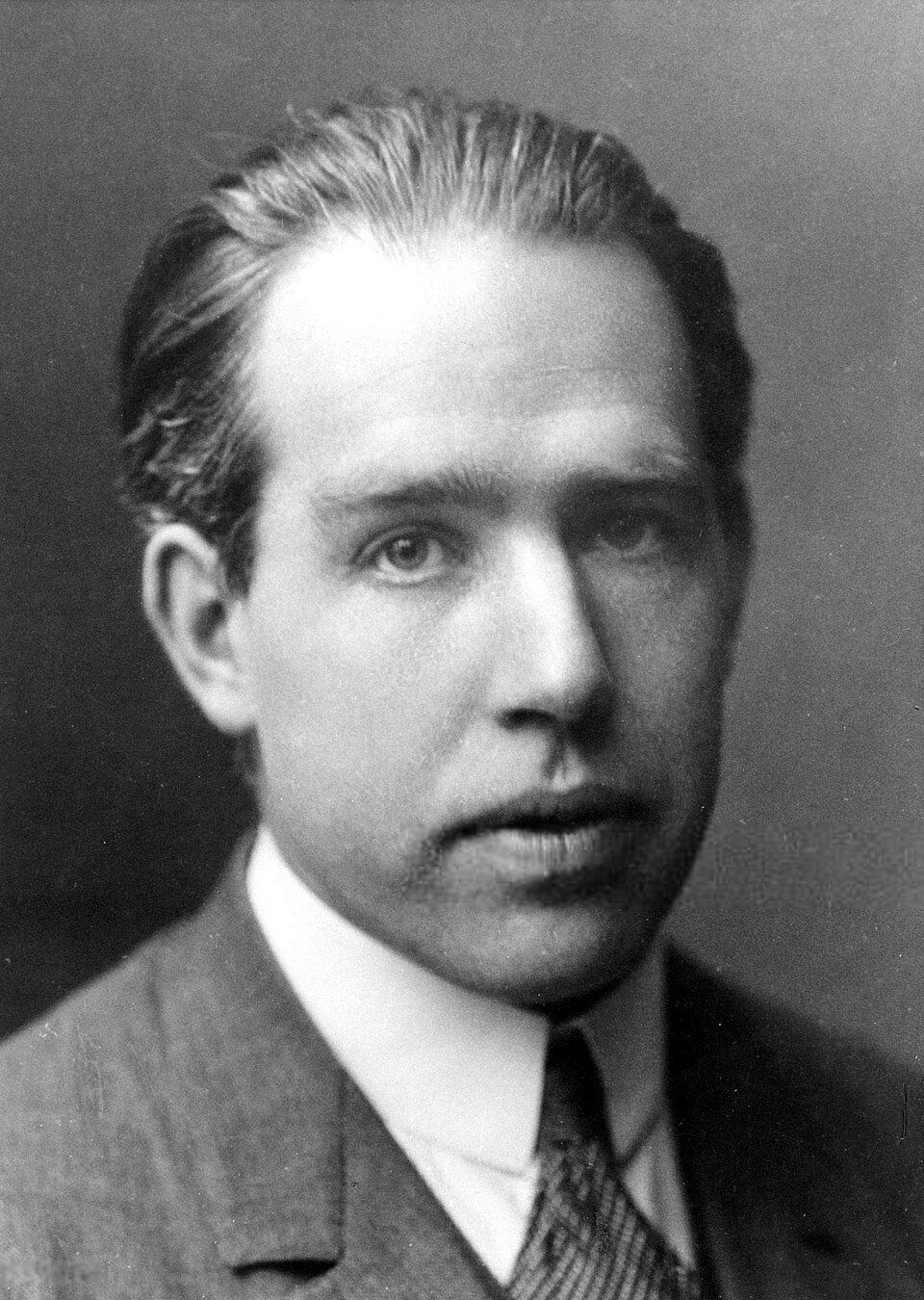
Niels Bohr
Also known as 尼尔斯·玻尔
1885 — 1962
Theoretical physicist
A physicist whose atomic model and Copenhagen institute helped shape the development of quantum theory.
Saved lives stay only on this device.
The life behind the name
A life, in context
Niels Bohr was born in Copenhagen and studied at the city's university before working with physicists in Britain. Building on Rutherford's nuclear atom and emerging quantum ideas, he proposed a model in 1913 in which electrons occupied particular energy states. The model explained important features of hydrogen's spectrum and gave researchers a practical bridge between older physics and a developing quantum account of matter. Later theories replaced parts of the model while retaining the significance of discrete energy states.
Bohr founded a research institute in Copenhagen that became a gathering place for scientists exchanging ideas about atomic and quantum physics. He received the 1922 Nobel Prize in Physics and developed influential arguments about complementarity and the interpretation of experiments. During the Second World War, he escaped occupied Denmark and participated in the Allied atomic project. Afterward, he advocated greater openness concerning nuclear technology and its international consequences. His life includes scientific discovery, institution building and sustained debate about the meaning and responsibilities of knowledge. Many of his achievements grew through conversation, disagreement and collaboration with younger researchers.
What they helped make possible
The legacy that continues
Bohr developed an influential quantum model of the atom and helped build an international center for theoretical physics. His ideas shaped debates about quantum measurement and interpretation.
Moments along the way
A life in chapters
- 1913
Atomic model
Published a model connecting atomic energy states with observed spectra.
- 1921
Copenhagen institute
His Institute for Theoretical Physics opened in Copenhagen.
- 1922
Nobel Prize in Physics
Recognized for investigations of atomic structure and radiation.
Remembered together
A place to remember together.
Leave a gesture, share a thought, and keep this life close.
Following is saved to your account across devices. “Save for later” keeps a separate bookmark in this browser.
Checking your account…
A quiet moment to remember.
Customs and beliefs differ. Choose a gesture that feels right to you; each is optional.
Shared moments of remembrance
Thoughts on this life
Comments are reviewed before appearing publicly. Share a thoughtful reflection on this person’s life or work.
Suggest a profile correction
Help keep this public record accurate. Suggestions are reviewed before the profile is changed, and a source link is especially helpful for factual details.
Loading shared remembrance…
A personal practice
Carry something forward.
A legacy can begin with one small choice. Write for yourself; these words are never added to the public memorial.
Private to this browser. Turning saving off removes the saved copy. Download a copy to take it with you.
Not saved on this device.
Share this public story
A name, a story and a light to carry forward. This link opens the reviewed public page.
Create a memory book
Choose the stories to keep, arrange their chapters, and make a printable copy. Book edits apply to your exported copy.
Every life is a light. A story to keep.
7 selected chapters
Edit this chapter
Edit this chapter
Edit this chapter
Edit this chapter
Edit this chapter
Edit this chapter
Edit this chapter
Read further
Sources & further reading
Explore the published references behind this profile. These links open in a new tab.
A place for your own remembrance
Is there someone you are remembering?
You can begin with a name and one memory. A private memorial space can hold photographs, stories and the dates your family returns to.
Private by default. You decide what to share.