Science · Polish
Nicolaus Copernicus
Also known as 尼古拉·哥白尼
1473 — 1543
Astronomer and cathedral canon
An astronomer whose mathematical model placed Earth among the planets moving around the Sun.
Saved lives stay only on this device.
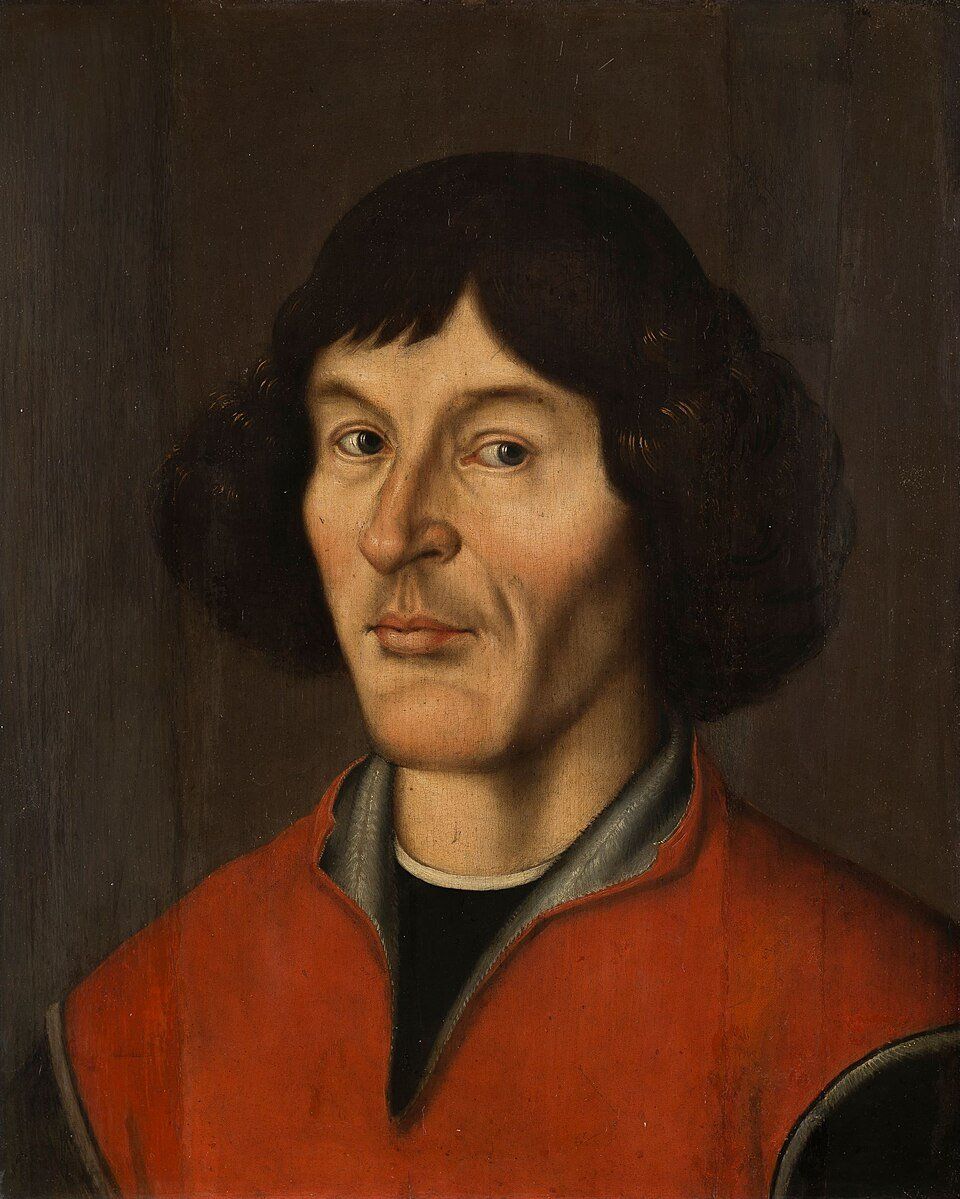
The life behind the name
A life, in context
Nicolaus Copernicus was born in Toruń and received a broad education that included mathematics, astronomy, law and medicine. He studied in Kraków and at universities in Italy before returning to serve as a cathedral canon in Warmia. Alongside administrative and medical responsibilities, he investigated the mathematical descriptions used to predict planetary positions. He sought a more coherent arrangement of celestial motions, developing a model in which Earth rotated and traveled around the Sun.
Copernicus shared an early outline of his ideas with a limited circle and worked on his larger treatise over many years. The young mathematician Georg Joachim Rheticus visited him, studied the model and helped bring it to publication. De revolutionibus orbium coelestium appeared in 1543, near the end of Copernicus's life. Its system retained circular motions and required later improvements, but it changed the questions astronomers asked about Earth's place in the heavens. The subsequent work of Kepler, Galileo and others depended on observation and debate that extended well beyond the original book.
What they helped make possible
The legacy that continues
Copernicus developed a systematic heliocentric model that recast Earth as a moving planet. It became a starting point for major changes in astronomy and physics.
Moments along the way
A life in chapters
- 1503
Studies in Italy
Received a doctorate in canon law at Ferrara.
- 1539
Collaboration with Rheticus
Rheticus arrived to study his astronomical system.
- 1543
De revolutionibus
His principal treatise on planetary motions was published.
Remembered together
A place to remember together.
Leave a gesture, share a thought, and keep this life close.
Following is saved to your account across devices. “Save for later” keeps a separate bookmark in this browser.
Checking your account…
A quiet moment to remember.
Customs and beliefs differ. Choose a gesture that feels right to you; each is optional.
Shared moments of remembrance
Thoughts on this life
Comments are reviewed before appearing publicly. Share a thoughtful reflection on this person’s life or work.
Suggest a profile correction
Help keep this public record accurate. Suggestions are reviewed before the profile is changed, and a source link is especially helpful for factual details.
Loading shared remembrance…
A personal practice
Carry something forward.
A legacy can begin with one small choice. Write for yourself; these words are never added to the public memorial.
Private to this browser. Turning saving off removes the saved copy. Download a copy to take it with you.
Not saved on this device.
Share this public story
A name, a story and a light to carry forward. This link opens the reviewed public page.
Create a memory book
Choose the stories to keep, arrange their chapters, and make a printable copy. Book edits apply to your exported copy.
Every life is a light. A story to keep.
7 selected chapters
Edit this chapter
Edit this chapter
Edit this chapter
Edit this chapter
Edit this chapter
Edit this chapter
Edit this chapter
Read further
Sources & further reading
Explore the published references behind this profile. These links open in a new tab.
- Wikipedia — Nicolaus Copernicus (opens in a new tab)en.wikipedia.org
- University of St Andrews — Nicolaus Copernicus biography (opens in a new tab)mathshistory.st-andrews.ac.uk
- Portrait: Unknown authorUnknown author · Public domain (opens in a new tab)commons.wikimedia.org
A place for your own remembrance
Is there someone you are remembering?
You can begin with a name and one memory. A private memorial space can hold photographs, stories and the dates your family returns to.
Private by default. You decide what to share.