Science · German
Max Planck
Also known as 马克斯·普朗克
1858 — 1947
Theoretical physicist
A theoretical physicist whose study of thermal radiation introduced the quantum of action.
Saved lives stay only on this device.
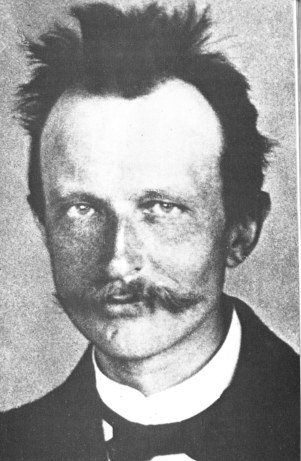
The life behind the name
A life, in context
Max Planck was born in Kiel and trained in physics in Munich and Berlin. Much of his early work concerned thermodynamics, the principles governing heat and energy. While investigating the radiation emitted by heated bodies, he tried to reconcile experimental measurements with a consistent theoretical description. In 1900, he introduced a relationship in which energy exchanges involved discrete quantities proportional to frequency, using the constant now associated with his name.
The proposal emerged from a specific problem and developed into a far-reaching challenge to classical physics. Einstein and other researchers extended quantum ideas in directions Planck did not initially anticipate. Planck received the 1918 Nobel Prize in Physics and held important roles in German scientific institutions. His later life included war, bereavement and difficult decisions under Nazi rule; his son Erwin was executed in 1945. He died in Göttingen in 1947. His scientific legacy lies in a carefully developed account of radiation that helped initiate quantum theory, while his personal history belongs to the troubled circumstances of twentieth-century European science.
What they helped make possible
The legacy that continues
Planck introduced the quantum of action while explaining blackbody radiation. The constant and relationships arising from this work became central to quantum physics.
Moments along the way
A life in chapters
- 1900
Quantum hypothesis
Introduced quantized energy exchanges in his account of thermal radiation.
- 1918
Nobel Prize in Physics
The prize recognized his discovery of energy quanta.
- 1930
Scientific leadership
Became president of the Kaiser Wilhelm Society.
Remembered together
A place to remember together.
Leave a gesture, share a thought, and keep this life close.
Following is saved to your account across devices. “Save for later” keeps a separate bookmark in this browser.
Checking your account…
A quiet moment to remember.
Customs and beliefs differ. Choose a gesture that feels right to you; each is optional.
Shared moments of remembrance
Thoughts on this life
Comments are reviewed before appearing publicly. Share a thoughtful reflection on this person’s life or work.
Suggest a profile correction
Help keep this public record accurate. Suggestions are reviewed before the profile is changed, and a source link is especially helpful for factual details.
Loading shared remembrance…
A personal practice
Carry something forward.
A legacy can begin with one small choice. Write for yourself; these words are never added to the public memorial.
Private to this browser. Turning saving off removes the saved copy. Download a copy to take it with you.
Not saved on this device.
Share this public story
A name, a story and a light to carry forward. This link opens the reviewed public page.
Create a memory book
Choose the stories to keep, arrange their chapters, and make a printable copy. Book edits apply to your exported copy.
Every life is a light. A story to keep.
7 selected chapters
Edit this chapter
Edit this chapter
Edit this chapter
Edit this chapter
Edit this chapter
Edit this chapter
Edit this chapter
Read further
Sources & further reading
Explore the published references behind this profile. These links open in a new tab.
- Nobel Prize — Max Planck facts (opens in a new tab)www.nobelprize.org
- Wikipedia — Max Planck (opens in a new tab)en.wikipedia.org
- Portrait: Historical portrait · Public domain (opens in a new tab)commons.wikimedia.org
A place for your own remembrance
Is there someone you are remembering?
You can begin with a name and one memory. A private memorial space can hold photographs, stories and the dates your family returns to.
Private by default. You decide what to share.