Literature · American
Emily Dickinson
Also known as 艾米莉·狄金森
1830 — 1886
Poet
A poet whose compressed, surprising language gave new shape to questions of perception, faith, love, and mortality.
Saved lives stay only on this device.
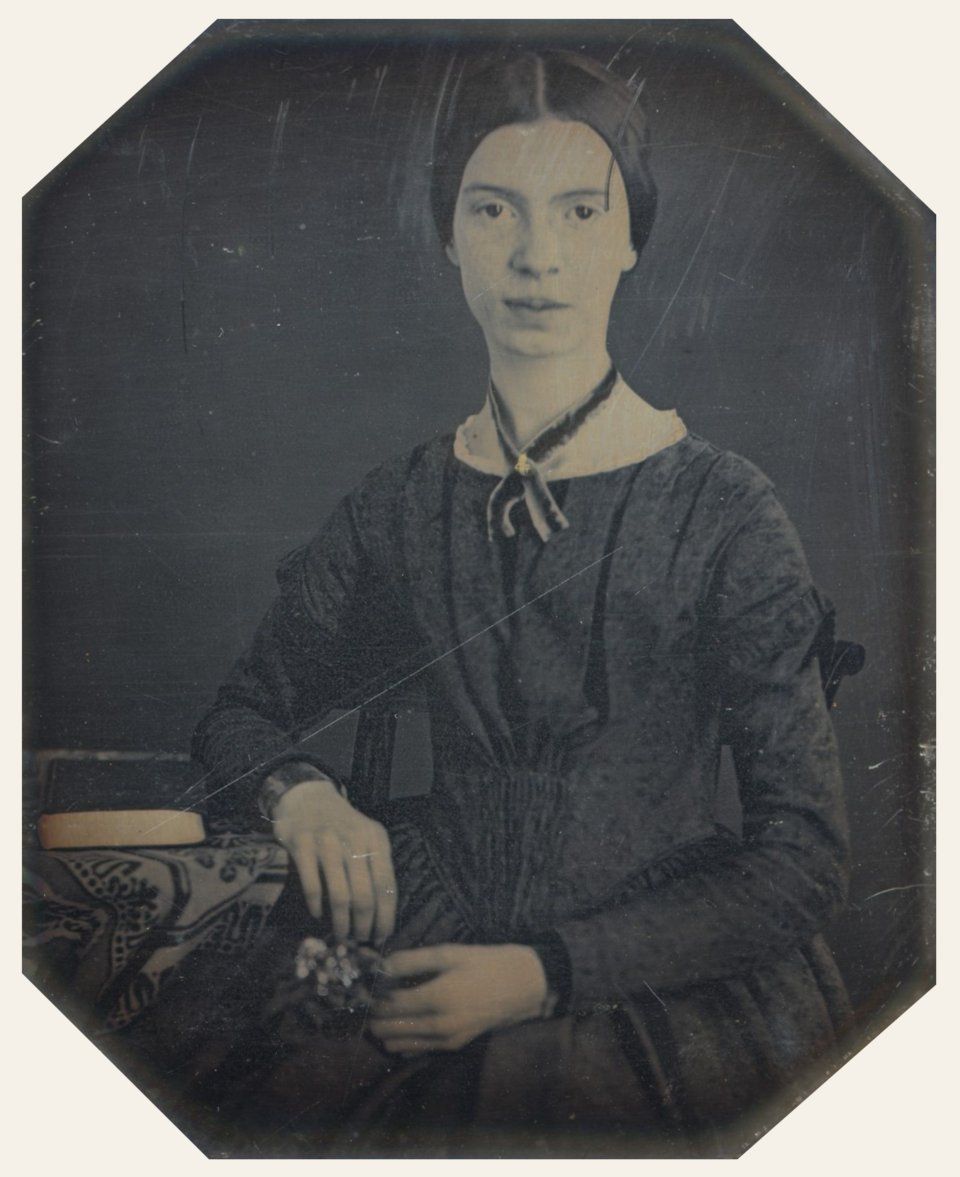
The life behind the name
A life, in context
Emily Dickinson spent most of her life in Amherst, Massachusetts, within a household that also included her parents, brother, and sister. She attended Amherst Academy and Mount Holyoke Female Seminary before returning home. Although she gradually withdrew from many public occasions, her life included extensive correspondence, friendships, gardening, reading, and domestic work. Letters carried affection and intellectual exchange beyond the house, challenging the simple image of a poet entirely cut off from other people.
Dickinson wrote nearly eighteen hundred poems, often preserving them in small manuscript gatherings. Her distinctive punctuation, slant rhyme, and abrupt turns of thought made familiar subjects strange and newly visible. Only a small number of poems appeared during her lifetime, generally without her full control over their presentation. After her death in 1886, her sister Lavinia helped bring the manuscripts to attention. Early editors altered some of their language and form, while later scholarship worked toward more faithful versions. Reading Dickinson can therefore include both an encounter with an original voice and attention to the people and editorial decisions through which that voice reached the public.
What they helped make possible
The legacy that continues
Dickinson enlarged the expressive possibilities of short lyric poetry through compressed images, unconventional rhythm, and unresolved questions. Her manuscripts have also shaped thinking about how editorial choices affect a writer’s legacy. Her poems remain a place where uncertainty can be examined without being hurried into a final explanation.
Moments along the way
A life in chapters
- 1847
Studies at Mount Holyoke
She entered Mount Holyoke Female Seminary and studied there until 1848.
- 1862
Correspondence with Higginson
She began a lasting exchange with writer and critic Thomas Wentworth Higginson.
- 1890
A first posthumous collection
A volume of poems introduced a wider readership to her work.
Remembered together
A place to remember together.
Leave a gesture, share a thought, and keep this life close.
Following is saved to your account across devices. “Save for later” keeps a separate bookmark in this browser.
Checking your account…
A quiet moment to remember.
Customs and beliefs differ. Choose a gesture that feels right to you; each is optional.
Shared moments of remembrance
Thoughts on this life
Comments are reviewed before appearing publicly. Share a thoughtful reflection on this person’s life or work.
Suggest a profile correction
Help keep this public record accurate. Suggestions are reviewed before the profile is changed, and a source link is especially helpful for factual details.
Loading shared remembrance…
A personal practice
Carry something forward.
A legacy can begin with one small choice. Write for yourself; these words are never added to the public memorial.
Private to this browser. Turning saving off removes the saved copy. Download a copy to take it with you.
Not saved on this device.
Share this public story
A name, a story and a light to carry forward. This link opens the reviewed public page.
Create a memory book
Choose the stories to keep, arrange their chapters, and make a printable copy. Book edits apply to your exported copy.
Every life is a light. A story to keep.
7 selected chapters
Edit this chapter
Edit this chapter
Edit this chapter
Edit this chapter
Edit this chapter
Edit this chapter
Edit this chapter
Read further
Sources & further reading
Explore the published references behind this profile. These links open in a new tab.
- Emily Dickinson Museum — Biography (opens in a new tab)www.emilydickinsonmuseum.org
- Wikipedia — Emily Dickinson, biography and references (opens in a new tab)en.wikipedia.org
- Portrait: Unknown authorUnknown author · Public domain (opens in a new tab)commons.wikimedia.org
A place for your own remembrance
Is there someone you are remembering?
You can begin with a name and one memory. A private memorial space can hold photographs, stories and the dates your family returns to.
Private by default. You decide what to share.