Arts · American
Duke Ellington
Also known as Edward Kennedy Ellington · 杜克·艾灵顿
1899 — 1974
Composer, pianist, and orchestra leader
A composer and orchestra leader who treated the distinctive voices of his musicians as essential materials for an expansive musical world.
Saved lives stay only on this device.
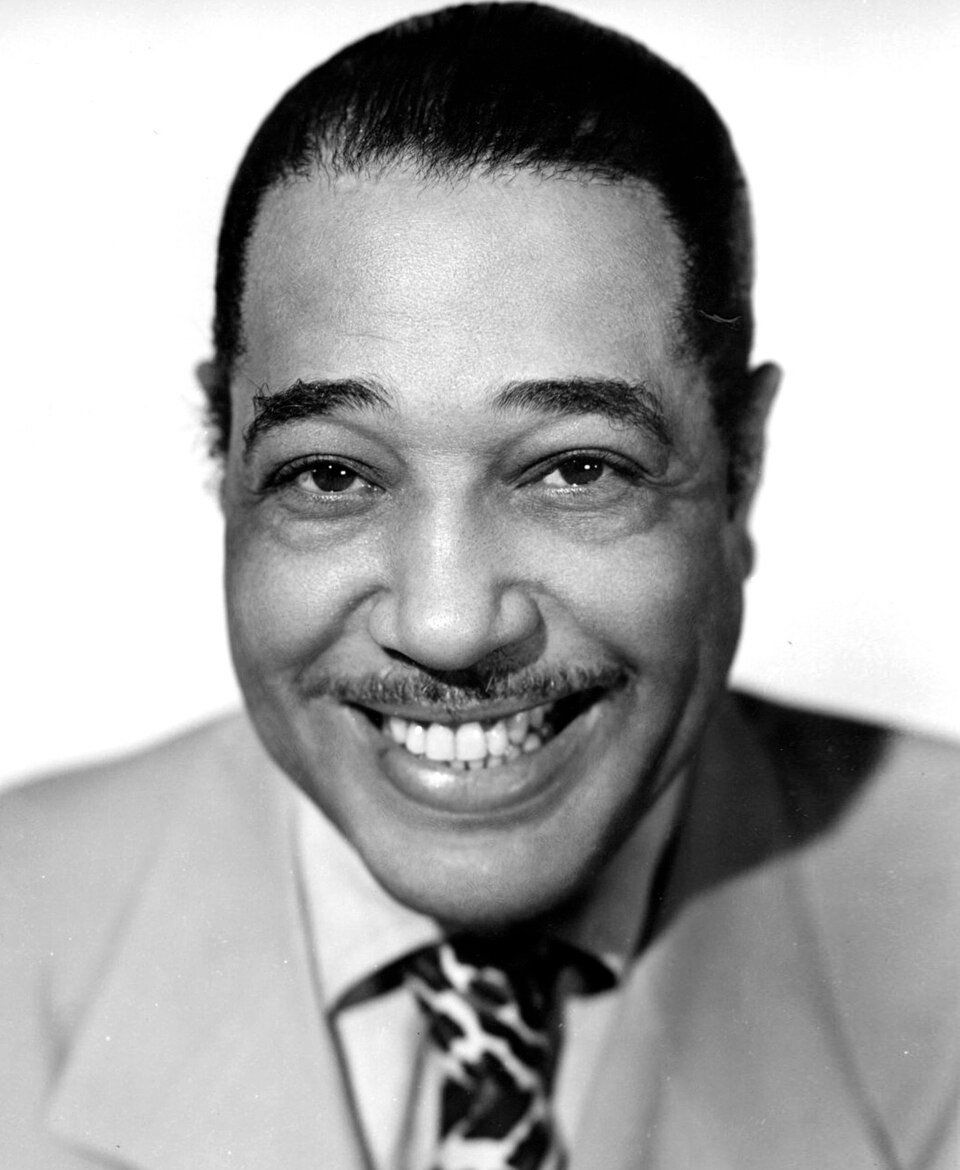
The life behind the name
A life, in context
Duke Ellington was born Edward Kennedy Ellington in Washington, DC, where he studied piano and began performing professionally. He moved to New York in the 1920s and developed an orchestra whose appearances at the Cotton Club, carried by radio, reached a growing audience. Ellington composed with particular players in mind, drawing on the colours and personalities of their instruments. Musicians including Johnny Hodges, Cootie Williams, and many others contributed to the sound through which listeners came to recognize the orchestra.
Ellington's work ranged from short recordings and popular songs to suites, film music, and sacred concerts. His long collaboration with Billy Strayhorn was especially important, producing music through a shared professional language rather than a simple division of tasks. Black, Brown and Beige, presented at Carnegie Hall in 1943, demonstrated his ambition to explore history through extended musical form. International touring and a widely celebrated Newport Jazz Festival appearance in 1956 brought the orchestra to new generations of listeners. Ellington continued leading and composing until his death in 1974. His legacy rests on both individual imagination and the continuing contributions of the musicians who made his scores audible.
What they helped make possible
The legacy that continues
Ellington expanded the scale, colours, and public settings of jazz composition. His writing for individual musicians and his partnership with Billy Strayhorn demonstrate how an orchestra can become a continuing collaborative instrument, rather than merely a vehicle for one person’s ideas.
Moments along the way
A life in chapters
- 1927
The Cotton Club residency
His orchestra began the residency whose broadcasts helped build a national audience.
- 1943
Black, Brown and Beige
Presented the extended work at Carnegie Hall.
- 1956
Newport Jazz Festival
The orchestra’s appearance helped renew its wider public recognition.
Remembered together
A place to remember together.
Leave a gesture, share a thought, and keep this life close.
Following is saved to your account across devices. “Save for later” keeps a separate bookmark in this browser.
Checking your account…
A quiet moment to remember.
Customs and beliefs differ. Choose a gesture that feels right to you; each is optional.
Shared moments of remembrance
Thoughts on this life
Comments are reviewed before appearing publicly. Share a thoughtful reflection on this person’s life or work.
Suggest a profile correction
Help keep this public record accurate. Suggestions are reviewed before the profile is changed, and a source link is especially helpful for factual details.
Loading shared remembrance…
A personal practice
Carry something forward.
A legacy can begin with one small choice. Write for yourself; these words are never added to the public memorial.
Private to this browser. Turning saving off removes the saved copy. Download a copy to take it with you.
Not saved on this device.
Share this public story
A name, a story and a light to carry forward. This link opens the reviewed public page.
Create a memory book
Choose the stories to keep, arrange their chapters, and make a printable copy. Book edits apply to your exported copy.
Every life is a light. A story to keep.
7 selected chapters
Edit this chapter
Edit this chapter
Edit this chapter
Edit this chapter
Edit this chapter
Edit this chapter
Edit this chapter
Read further
Sources & further reading
Explore the published references behind this profile. These links open in a new tab.
- Duke Ellington Orchestra and Estate — The Man (opens in a new tab)dukeellington.com
- Wikipedia — Duke Ellington (opens in a new tab)en.wikipedia.org
- Portrait: Unknown authorUnknown author · Public domain (opens in a new tab)commons.wikimedia.org
A place for your own remembrance
Is there someone you are remembering?
You can begin with a name and one memory. A private memorial space can hold photographs, stories and the dates your family returns to.
Private by default. You decide what to share.