Science · Chinese-American
Chien-Shiung Wu
Also known as 吴健雄
1912 — 1997
Experimental nuclear physicist
An experimental physicist whose work demonstrated that parity is not conserved in certain weak interactions.
Saved lives stay only on this device.
The life behind the name
A life, in context
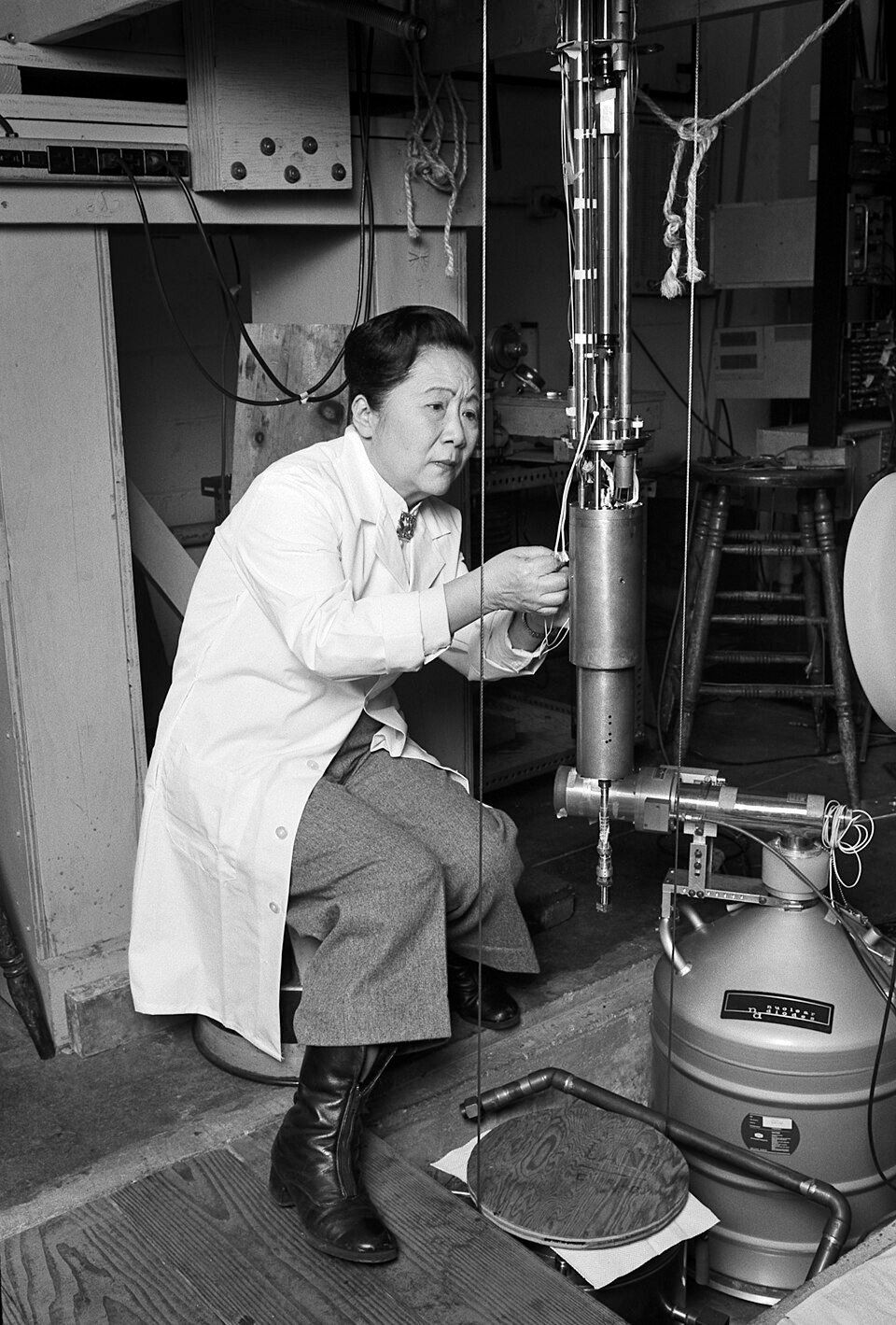
Chien-Shiung Wu was born in Jiangsu, China, and received educational encouragement from her family. She studied physics in China before moving to the United States and earning a doctorate at the University of California, Berkeley. Her later research at Columbia University focused on nuclear processes and beta decay. She became known for designing precise experiments that could distinguish between competing theoretical descriptions, bringing technical skill to questions that demanded particularly careful measurements.
In work with researchers at the National Bureau of Standards, Wu tested a proposal by Tsung-Dao Lee and Chen-Ning Yang concerning parity in weak interactions. The experiment, published in 1957, showed an asymmetry in the beta decay of polarized cobalt nuclei and overturned an assumption that had seemed broadly reliable. Lee and Yang received that year's Nobel Prize; Wu's experimental contribution remains central to the history. She continued research, teaching and professional leadership, becoming the first woman president of the American Physical Society. Her life connects scientific migration, experimental ingenuity and questions about recognition, opportunity and the work required to turn an idea into evidence.
What they helped make possible
The legacy that continues
Wu's beta-decay experiments established parity violation in weak interactions and tested important parts of nuclear theory. Her research strengthened the role of precision measurement in physics.
Moments along the way
A life in chapters
- 1957
Parity-violation experiment
Published decisive experimental evidence with collaborators.
- 1975
American Physical Society
Became the society’s first woman president.
- 1978
Wolf Prize in Physics
Received the inaugural Wolf Prize in Physics.
Remembered together
A place to remember together.
Leave a gesture, share a thought, and keep this life close.
Following is saved to your account across devices. “Save for later” keeps a separate bookmark in this browser.
Checking your account…
A quiet moment to remember.
Customs and beliefs differ. Choose a gesture that feels right to you; each is optional.
Shared moments of remembrance
Thoughts on this life
Comments are reviewed before appearing publicly. Share a thoughtful reflection on this person’s life or work.
Suggest a profile correction
Help keep this public record accurate. Suggestions are reviewed before the profile is changed, and a source link is especially helpful for factual details.
Loading shared remembrance…
A personal practice
Carry something forward.
A legacy can begin with one small choice. Write for yourself; these words are never added to the public memorial.
Private to this browser. Turning saving off removes the saved copy. Download a copy to take it with you.
Not saved on this device.
Share this public story
A name, a story and a light to carry forward. This link opens the reviewed public page.
Create a memory book
Choose the stories to keep, arrange their chapters, and make a printable copy. Book edits apply to your exported copy.
Every life is a light. A story to keep.
7 selected chapters
Edit this chapter
Edit this chapter
Edit this chapter
Edit this chapter
Edit this chapter
Edit this chapter
Edit this chapter
Read further
Sources & further reading
Explore the published references behind this profile. These links open in a new tab.
- Wikipedia — Chien-Shiung Wu (opens in a new tab)en.wikipedia.org
- National Women's History Museum — Chien-Shiung Wu (opens in a new tab)www.womenshistory.org
- Portrait: Lynn Gilbert · CC BY-SA 4.0 (opens in a new tab)commons.wikimedia.org
- Portrait license: CC BY-SA 4.0 (opens in a new tab)creativecommons.org
A place for your own remembrance
Is there someone you are remembering?
You can begin with a name and one memory. A private memorial space can hold photographs, stories and the dates your family returns to.
Private by default. You decide what to share.