Science · American
Barbara McClintock
Also known as 芭芭拉·麦克林托克
1902 — 1992
Geneticist and cytogeneticist
A geneticist whose studies of maize revealed that some genetic elements can move within chromosomes.
Saved lives stay only on this device.
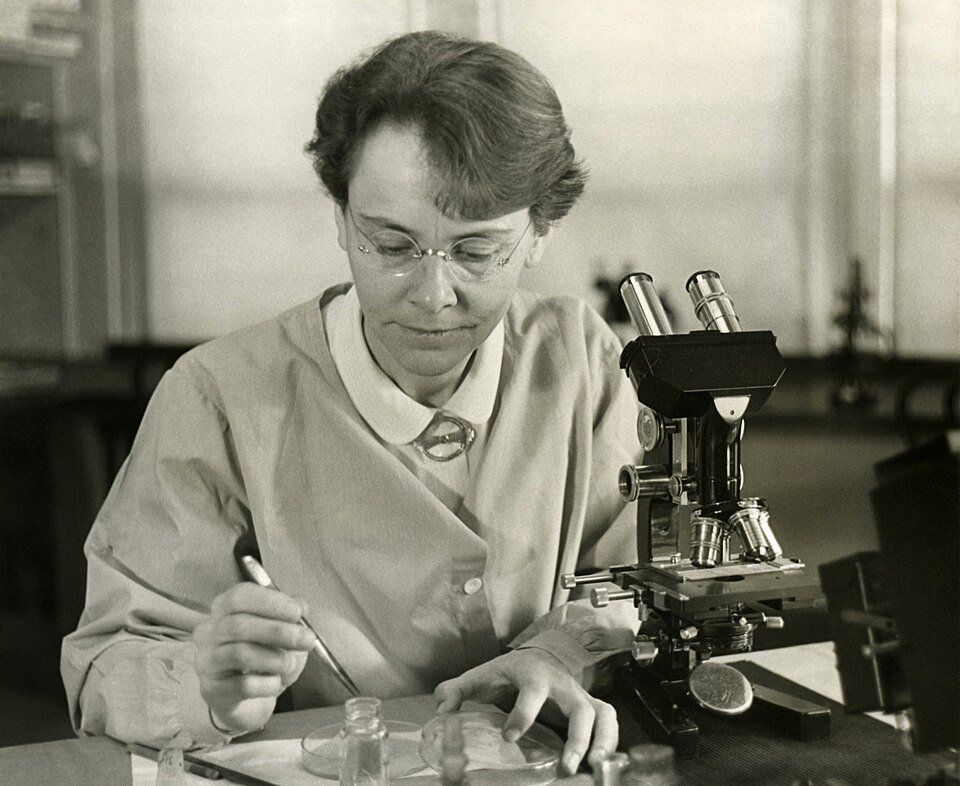
The life behind the name
A life, in context
Barbara McClintock was born in Connecticut and trained at Cornell University, where she developed methods for studying maize chromosomes. By connecting microscopic chromosome structures with inherited traits, she helped make cytogenetics a powerful way to investigate heredity. Her early work with Harriet Creighton demonstrated a relationship between chromosome exchange and genetic recombination. She continued examining chromosome behavior through careful breeding experiments, microscopic observation and the changing patterns of maize kernels.
At Cold Spring Harbor, McClintock identified genetic elements that could change position and influence the activity of nearby genes. Her findings challenged a simple picture of genes fixed permanently in one arrangement. She published key work in 1950, but broad recognition developed slowly as other organisms and molecular methods supplied further evidence. She received the 1983 Nobel Prize in Physiology or Medicine for the discovery of mobile genetic elements. Her career extended through decades of focused research, with close attention to individual plants and experimental histories. It shows how detailed knowledge of one organism can reveal principles relevant to many forms of life.
What they helped make possible
The legacy that continues
McClintock discovered mobile genetic elements and advanced chromosome-based studies of heredity. Her maize experiments changed how scientists understood genetic regulation and genome structure.
Moments along the way
A life in chapters
- 1941
Cold Spring Harbor
Began research at Cold Spring Harbor Laboratory.
- 1950
Mobile genetic elements
Published research on mutable loci and controlling elements in maize.
- 1983
Nobel Prize
Recognized for discovering mobile genetic elements.
Remembered together
A place to remember together.
Leave a gesture, share a thought, and keep this life close.
Following is saved to your account across devices. “Save for later” keeps a separate bookmark in this browser.
Checking your account…
A quiet moment to remember.
Customs and beliefs differ. Choose a gesture that feels right to you; each is optional.
Shared moments of remembrance
Thoughts on this life
Comments are reviewed before appearing publicly. Share a thoughtful reflection on this person’s life or work.
Suggest a profile correction
Help keep this public record accurate. Suggestions are reviewed before the profile is changed, and a source link is especially helpful for factual details.
Loading shared remembrance…
A personal practice
Carry something forward.
A legacy can begin with one small choice. Write for yourself; these words are never added to the public memorial.
Private to this browser. Turning saving off removes the saved copy. Download a copy to take it with you.
Not saved on this device.
Share this public story
A name, a story and a light to carry forward. This link opens the reviewed public page.
Create a memory book
Choose the stories to keep, arrange their chapters, and make a printable copy. Book edits apply to your exported copy.
Every life is a light. A story to keep.
7 selected chapters
Edit this chapter
Edit this chapter
Edit this chapter
Edit this chapter
Edit this chapter
Edit this chapter
Edit this chapter
Read further
Sources & further reading
Explore the published references behind this profile. These links open in a new tab.
A place for your own remembrance
Is there someone you are remembering?
You can begin with a name and one memory. A private memorial space can hold photographs, stories and the dates your family returns to.
Private by default. You decide what to share.