Arts · French
Auguste Rodin
Also known as François Auguste René Rodin · 奥古斯特·罗丹
1840 — 1917
Sculptor and draughtsman
A sculptor who gave the human figure renewed emotional force through movement, irregular surfaces, and the expressive possibilities of incomplete forms.
Saved lives stay only on this device.
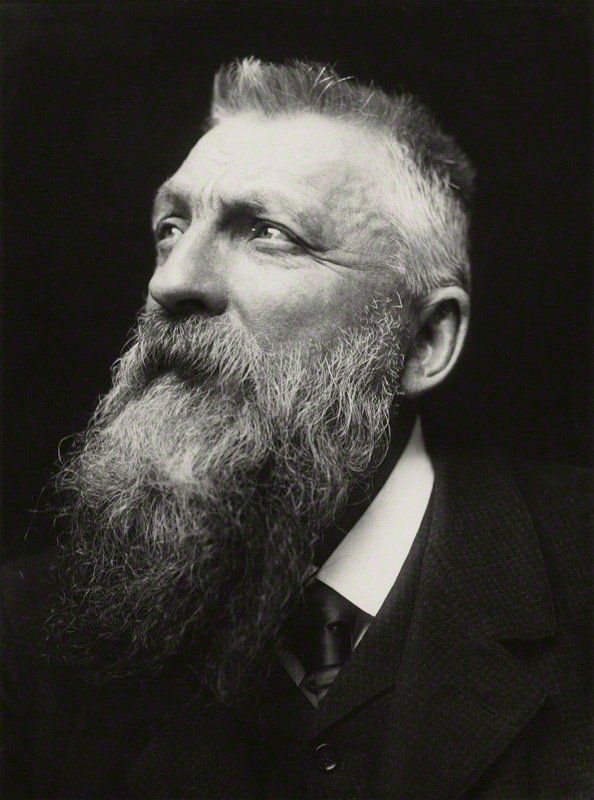
The life behind the name
A life, in context
Auguste Rodin was born in Paris and trained in drawing and modelling before earning his living through decorative work. Repeated rejection by the École des Beaux-Arts did not end his education; he continued learning through workshops, direct observation, and the study of earlier sculpture. A visit to Italy brought him into close contact with Michelangelo's work. The Age of Bronze, exhibited in 1877, attracted attention for its striking naturalism and helped establish his independent reputation as a sculptor.
In 1880, Rodin received a commission for a monumental doorway that became The Gates of Hell. He developed it over decades, and individual figures associated with the project, including The Thinker, took on separate lives. The Burghers of Calais and his monument to Balzac challenged expectations about public monuments through posture, collective vulnerability, and concentrated form. Rodin's practice relied on studio assistants and collaborators, including the sculptor Camille Claudel, whose independent achievements deserve recognition. He explored fragments, repeated casts, and unexpected combinations as serious artistic possibilities. He died in 1917, leaving his works and collection to the French state for a museum devoted to their preservation.
What they helped make possible
The legacy that continues
Rodin broadened sculpture’s expressive range through modelling, bodily movement, and the use of fragments. His monuments questioned heroic conventions, while his studio practice and repeated casting encouraged later discussions about originality, collaboration, and how sculpture is produced.
Moments along the way
A life in chapters
- 1877
The Age of Bronze
Exhibited the figure that helped establish his reputation for expressive naturalism.
- 1880
The Gates of Hell commission
Began the monumental doorway that generated many independent sculptures.
- 1895
The Burghers of Calais
His group monument was installed in Calais.
Remembered together
A place to remember together.
Leave a gesture, share a thought, and keep this life close.
Following is saved to your account across devices. “Save for later” keeps a separate bookmark in this browser.
Checking your account…
A quiet moment to remember.
Customs and beliefs differ. Choose a gesture that feels right to you; each is optional.
Shared moments of remembrance
Thoughts on this life
Comments are reviewed before appearing publicly. Share a thoughtful reflection on this person’s life or work.
Suggest a profile correction
Help keep this public record accurate. Suggestions are reviewed before the profile is changed, and a source link is especially helpful for factual details.
Loading shared remembrance…
A personal practice
Carry something forward.
A legacy can begin with one small choice. Write for yourself; these words are never added to the public memorial.
Private to this browser. Turning saving off removes the saved copy. Download a copy to take it with you.
Not saved on this device.
Share this public story
A name, a story and a light to carry forward. This link opens the reviewed public page.
Create a memory book
Choose the stories to keep, arrange their chapters, and make a printable copy. Book edits apply to your exported copy.
Every life is a light. A story to keep.
7 selected chapters
Edit this chapter
Edit this chapter
Edit this chapter
Edit this chapter
Edit this chapter
Edit this chapter
Edit this chapter
Read further
Sources & further reading
Explore the published references behind this profile. These links open in a new tab.
- Musée Rodin — Sculpture and architecture (opens in a new tab)www.musee-rodin.fr
- Wikipedia — Auguste Rodin (opens in a new tab)en.wikipedia.org
- Portrait: George Charles Beresford · Public domain (opens in a new tab)commons.wikimedia.org
A place for your own remembrance
Is there someone you are remembering?
You can begin with a name and one memory. A private memorial space can hold photographs, stories and the dates your family returns to.
Private by default. You decide what to share.